

The New SWOT of a Leader: How HR Can Use Predictive Index to Grow Leaders and Business Performance
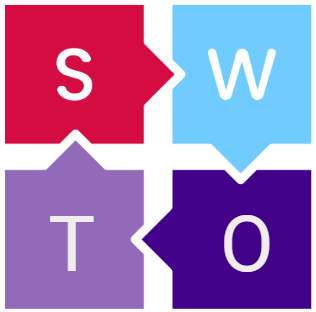
The New SWOT of a Leader™
How HR Can Leverage It to Grow Leaders and the Business
For decades, organizations have relied on the classic SWOT framework — Strengths, Weaknesses, Opportunities, and Threats — to evaluate business performance and strategic positioning. It has been a cornerstone of corporate planning, helping companies identify where they excel, where they struggle, and where they should invest next.
But while businesses rigorously analyze markets, products, and competitors, many overlook the most important driver of organizational success: leadership capability.
In today’s rapidly evolving workplace, leadership is no longer simply about experience or tenure. It is about behavioral alignment, self-awareness, and the ability to lead effectively under pressure. Organizations that understand how their leaders naturally think, act, and respond to challenges gain a significant competitive advantage.
That is why a modern adaptation of SWOT is gaining traction in progressive organizations: The New SWOT of a Leader™.
Instead of evaluating companies, this framework evaluates leaders themselves by focusing on the behavioral strengths, watch-outs, opportunities, and triggers that shape leadership performance.
When paired with data-driven talent insights such as those provided by The Predictive Index and implemented through talent optimization partners like Predictive Success Corporation, the Leader SWOT becomes far more than an exercise. It becomes a system for intentionally designing leadership success.
Why Leadership Analysis Matters More Than Ever
Leadership capability has become one of the most critical factors in organizational performance.
In uncertain markets, strategy alone is not enough. Execution depends on leaders who can make decisions quickly, navigate ambiguity, motivate diverse teams, and drive results without burning out their people.
However, traditional leadership development programs often rely on generic training sessions, personality assumptions, or subjective feedback.
The problem is that leaders are often developed based on opinion rather than data.
The New SWOT of a Leader™ changes that by introducing a structured framework that helps HR teams and executives understand how leaders are naturally wired to lead.
When organizations combine this framework with behavioral and cognitive insights from The Predictive Index, leadership development becomes more precise, scalable, and impactful.
Let’s explore each component of the Leader SWOT and how HR teams can leverage it to grow both leaders and the business.

An example of a 1:1 Relationship Guide in the Predictive Index

S — Strengths
Understanding Natural Leadership Drives
The first component of the Leader SWOT focuses on Strengths, but not in the traditional sense.
This is not about résumé achievements, technical skills, or past accomplishments. Instead, it focuses on behavioral strengths: the natural drives that influence how a leader communicates, makes decisions, handles pressure, and motivates others.
Some leaders are naturally wired to drive results and push momentum. Others build strong relationships and influence people. Some excel at analyzing complex problems, while others maintain stability and consistency. Some leaders are energized by challenging the status quo and driving innovation.
Understanding these behavioral strengths is critical because leadership effectiveness increases dramatically when roles align with natural energy patterns.
For example, a highly dominant, results-oriented leader may thrive in a turnaround situation where rapid decisions and bold action are required. A highly collaborative leader may excel at building alignment across cross-functional teams. A highly analytical leader may be ideal for strategy-heavy or data-driven roles.
The challenge for many organizations is that leaders are often placed in roles based on tenure or promotion cycles rather than behavioral alignment.
Tools like The Predictive Index help HR teams identify these natural drives objectively. Through behavioral assessment data, organizations can clearly see what energizes a leader, how they prefer to influence others, and where they will naturally excel.
When HR understands these strengths, several positive outcomes emerge.
Roles align more precisely. Leaders spend more time operating in areas where they naturally succeed.
Decision making accelerates. Leaders feel confident acting within their natural leadership style.
Engagement increases. Leaders experience greater fulfillment when their work matches their behavioral strengths.
Burnout decreases. Leaders avoid constant friction that comes from operating against their natural tendencies.
The goal is not to fix leaders. The goal is to deploy them where they win.

W — Watch-Outs (Not Weaknesses)
Understanding the Risks of Overused Strengths
Traditional SWOT analysis focuses on weaknesses, but the New SWOT of a Leader™ reframes this concept.
Instead of labeling leaders as weak, the framework identifies Watch-Outs.
Watch-outs are not flaws. They are blind spots that emerge when strengths are overused, particularly under pressure.
Every leadership strength has a potential downside if pushed too far.
A highly dominant leader may push for results so aggressively that they unintentionally silence input from others.
A highly patient leader may avoid difficult conversations, delaying necessary action.
A highly extraverted leader may overcommit or overpromise in pursuit of enthusiasm and momentum.
A highly analytical leader may become overly cautious, slowing down decisions.
These tendencies rarely appear during calm periods. They surface during stress, deadlines, or organizational pressure.
That is why awareness is critical.
When leaders understand their watch-outs, they recognize when their strengths are becoming liabilities. They become more receptive to feedback and can adjust their leadership style in real time.
This is where HR plays a crucial role.
Instead of framing development conversations around weaknesses, HR can normalize watch-outs as a natural part of leadership psychology.
Using behavioral insights from The Predictive Index, HR teams can help leaders identify the conditions where their watch-outs are most likely to appear.
The result is a healthier leadership culture where conflict becomes constructive, feedback improves, trust develops faster, and leaders become more self-aware.
In modern leadership development, self-awareness is not optional. It is a core competency.

O — Opportunities
Identifying Where Leaders Can Scale Their Impact
The third component of the Leader SWOT focuses on Opportunities.
Most organizations define opportunity as promotion. But leadership growth is far more dynamic than a title change.
Opportunities can include leading strategic initiatives, managing cross-functional teams, driving innovation programs, taking on turnaround projects, or preparing for succession roles.
When HR teams have access to behavioral and cognitive insights, they can match leaders to opportunities where they are most likely to succeed.
For example, some leaders thrive in high ambiguity environments where they can navigate complexity and make quick decisions.
Others perform best in stabilizing environments where consistency and long-term planning are required.
Some leaders excel at building followership and team cohesion, while others excel at driving bold change.
By leveraging insights from The Predictive Index, HR teams can identify who is ready for greater complexity, who thrives in uncertain environments, who stabilizes volatile teams, and who naturally builds trust and followership.
This approach transforms leadership development from a reactive process into a strategic one.
Instead of promotions being influenced by office politics or tenure, they become data informed decisions.
Leadership growth becomes intentional rather than accidental.

T — Triggers (The New Threat)
Identifying the Environmental Factors That Derail Leaders
In traditional SWOT analysis, threats refer to external market risks.
In leadership analysis, threats often come from the environment surrounding the leader.
These are known as Triggers.
Triggers are the conditions that disrupt leadership effectiveness. They may include misaligned expectations, role ambiguity, cultural mismatch, poor team composition, or chronic organizational stress.
Even high performing leaders can struggle if their environment is poorly designed.
For example, a highly independent leader may become frustrated in a highly bureaucratic culture. A collaborative leader may struggle in a cutthroat, competitive environment. A fast paced leader may feel constrained in an organization that moves slowly.
When HR teams understand these triggers, they can design leadership environments that support performance rather than undermine it.
Using insights from The Predictive Index, HR teams can proactively address triggers by designing balanced team dynamics, clarifying role expectations, providing leadership coaching before challenges escalate, and making succession decisions based on behavioral fit.
Instead of waiting for leadership breakdowns, organizations can design for leadership success.
How HR Can Leverage the Leader SWOT to Grow the Company
When implemented systematically, the New SWOT of a Leader™ becomes far more than a leadership exercise.
It becomes a strategic HR capability.
Organizations that apply this framework consistently see measurable improvements in leadership performance and organizational results.
Here are five key ways HR can leverage the Leader SWOT to drive growth.
Improve Succession Accuracy
Succession planning often relies heavily on tenure, visibility, or reputation.
Unfortunately, these indicators do not always predict leadership success.
By incorporating behavioral insights from The Predictive Index, HR teams can evaluate whether a candidate’s natural drives align with the demands of the next leadership role.
This dramatically improves promotion accuracy and reduces the risk of costly leadership mis-hires.
Accelerate Leadership Bench Strength
High potential leaders are often identified too late.
By applying the Leader SWOT framework early in a leader’s career, HR teams can identify future leadership capability sooner.
This allows organizations to develop high potentials earlier, provide targeted leadership coaching, and build a deeper and stronger leadership bench.
Build High Trust Teams
Team dynamics are often managed reactively, especially when conflict arises.
The Leader SWOT framework helps HR understand how different leadership styles interact within teams.
Using insights from The Predictive Index, HR teams can design balanced leadership teams, reduce personality driven conflict, improve collaboration, and strengthen psychological safety.
When team dynamics improve, performance follows.
Reduce Leadership Burnout
Leadership burnout is often caused by misalignment between role expectations and natural behavioral drives.
When leaders constantly operate against their natural tendencies, stress accumulates quickly.
The Leader SWOT framework helps HR ensure that leadership roles align with how leaders are naturally wired to work.
This alignment allows leaders to sustain performance over the long term without exhausting themselves or their teams.
Connect Leadership Capability to Business Results
Leadership effectiveness ultimately drives organizational performance.
Stronger leaders build stronger teams. Stronger teams execute strategy more effectively. Better execution produces better business outcomes.
When organizations systematically apply leadership insights through The Predictive Index and talent optimization strategies implemented by Predictive Success Corporation, leadership development becomes directly connected to business performance.
Leadership stops being just an HR initiative. It becomes a business growth strategy.
The Bottom Line
Most organizations analyze their markets more rigorously than they analyze their leaders.
Yet leadership capability remains one of the most powerful drivers of organizational success.
The New SWOT of a Leader™ provides HR teams with a structured framework to understand strengths, watch-outs, opportunities, and triggers that influence leadership effectiveness.
When combined with behavioral and cognitive insights from The Predictive Index, the Leader SWOT becomes a powerful system for building leadership capability across an organization.
It enables HR to move from reactive to strategic, from opinion to data, and from isolated training events to scalable leadership systems.
And when leadership systems improve, companies grow.
Because in today’s competitive environment, the organizations that win are the ones that intentionally engineer leadership rather than simply hoping great leaders will emerge.
For more information please reach out to Jennifer Lahey McGill at jlahey@predictivesuccess.com
Related Blogs

Why AI Is Changing the Definition of Smart and What HR Should Do About It
The New Definition of Smart And What It Means for Hiring, Leadership, and Talent Strategy Why AI Is Forcing Us to Rethink What “Talent” Really Looks Like Not long ago, being considered “smart” at work
The New SWOT of a Leader: How HR Can Use Predictive Index to Grow Leaders and Business Performance
The New SWOT of a Leader™ How HR Can Leverage It to Grow Leaders and the Business For decades, organizations have relied on the classic SWOT framework — Strengths, Weaknesses, Opportunities, and Threats —

Is Gen Z Unemployable? A Talent Optimization Perspective
Is Gen Z “Unemployable”? What the Debate Really Means for Employers A recent opinion piece in The Wall Street Journal titled Is Gen Z Unemployable? sparked widespread discussion among business leaders and HR professionals. The