

What does The Predictive Index® assessments measure?
By Michaela Picones |
0.8 min read
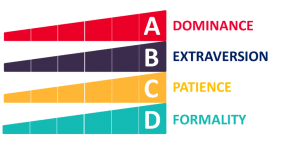
The PI Behavioural Assessment™ measures workplace behaviour according to four key factors, known as “drives.” The four drives are: Dominance, Extraversion, Patience and Formality.
- Dominance is the drive to exert influence over people or events. Low-dominance individuals are more collaborative and cooperative, whereas high-dominance people are independent, assertive, and comfortable with conflict.
- Extraversion is the drive for social interaction. Low-extraversion individuals value privacy, reflection and analysis. High-extraversion people are sociable, crave connection, and value recognition.
- Patience is the drive to seek consistency and stability. Low-patience people need variety, work fast, and can handle multiple priorities, while high-patience people prefer steady paces and are generally stable and loyal to their organizations.
Formality is the drive to conform to rules and structure. Low-formality individuals need freedom and flexibility and tolerate ambiguity and spontaneity. High-formality people are disciplined and often see themselves as experts. They need clear expectations in order to minimize the risk of error for the company.
Reference: predictivesuccess.com

Michaela Picones
Related Blogs
Why Most Personality Tests Fail Business Leaders (And What Actually Works)
Why Most Personality Tests Fail Business Leaders And The One That Actually Works Most business leaders have taken a personality test at some point in their career. Maybe it happened during a leadership retreat. Maybe
60 High-Impact Performance Review Phrases (Strengths & Weaknesses)
Conducting effective performance reviews is one of the most important responsibilities of any manager or business owner. Done right, employee evaluations don’t just measure past performance, they review strengths and weaknesses, drive engagement, improve productivity,
Is Your Team Ready for AI? A Practical Assessment Guide
Is Your Team Ready for AI? A Practical Assessment Guide Artificial intelligence is no longer an emerging trend reserved for innovation teams or tech-first organizations. It is quickly becoming embedded in how work gets done