Why Most Personality Tests Fail Business Leaders (And What Actually Works)

By Adrienne Reilly  |  

5.9 min read
Why Most Personality Tests Fail Business Leaders And The One That Actually Works

Most business leaders have taken a personality test at some point in their career.

Maybe it happened during a leadership retreat. Maybe it was part of a hiring process. Maybe HR introduced it as a way to improve communication or team dynamics.
The real question is not whether the assessment was interesting.

The real question is whether it actually helped leaders run their business better.

For most organizations, the answer is no.

Many traditional personality assessments are designed to spark self-awareness or conversation, but they stop there. They categorize people into broad personality “types” that often feel vague, overly simplistic, or disconnected from the realities of business performance. They can be engaging exercises, but they rarely provide leaders with actionable insights that improve hiring decisions, strengthen leadership effectiveness, or drive measurable business results.

And in today’s business environment, insight alone is not enough.

Leaders need results.

The Problem With Most Personality Tests

One of the biggest challenges with many personality assessments is that they focus more on describing people than predicting outcomes.

They may tell you someone is analytical, outgoing, cautious, or collaborative, but they do not tell you whether that person will succeed in a specific role, perform well under pressure, or complement the rest of the team.

That gap matters.

Organizations spend enormous amounts of time and money trying to hire the right people, yet many leaders still rely heavily on instinct when making critical talent decisions.

The problem is that human judgment is often inconsistent.

Research published by Harvard Business Review found that structured, data-driven hiring models can outperform human judgment in hiring decisions by at least 25 percent. Leaders may believe they are excellent judges of talent, but unconscious bias, emotional reactions, and inconsistent evaluation criteria often influence decision-making without them realizing it.

Humans are naturally influenced by small details that have little connection to actual job performance. A confident interview style, shared interests, or even first impressions can unintentionally shape hiring decisions.

That is human nature.

The issue is not that leaders lack experience or intelligence. The issue is that instinct alone is not a scalable or reliable hiring strategy.

Why Business Leaders Need More Than Personality Labels

Traditional personality assessments often stop at awareness.

They explain who someone is but fail to explain how that person will perform within the context of a real business environment.

Business leaders do not simply need personality labels.

They need answers to practical questions like:

  • Will this person succeed in this role?
  • How will they respond under pressure?
  • What motivates them?
  • How will they communicate with the team?
  • Will they complement or disrupt team dynamics?
  • How can we coach and develop them effectively?

Without those answers, personality data becomes interesting but not useful.

That is where Predictive Success and The Predictive Index stand apart.

The Predictive Index Difference

Unlike many traditional assessments, The Predictive Index is built specifically for business performance.

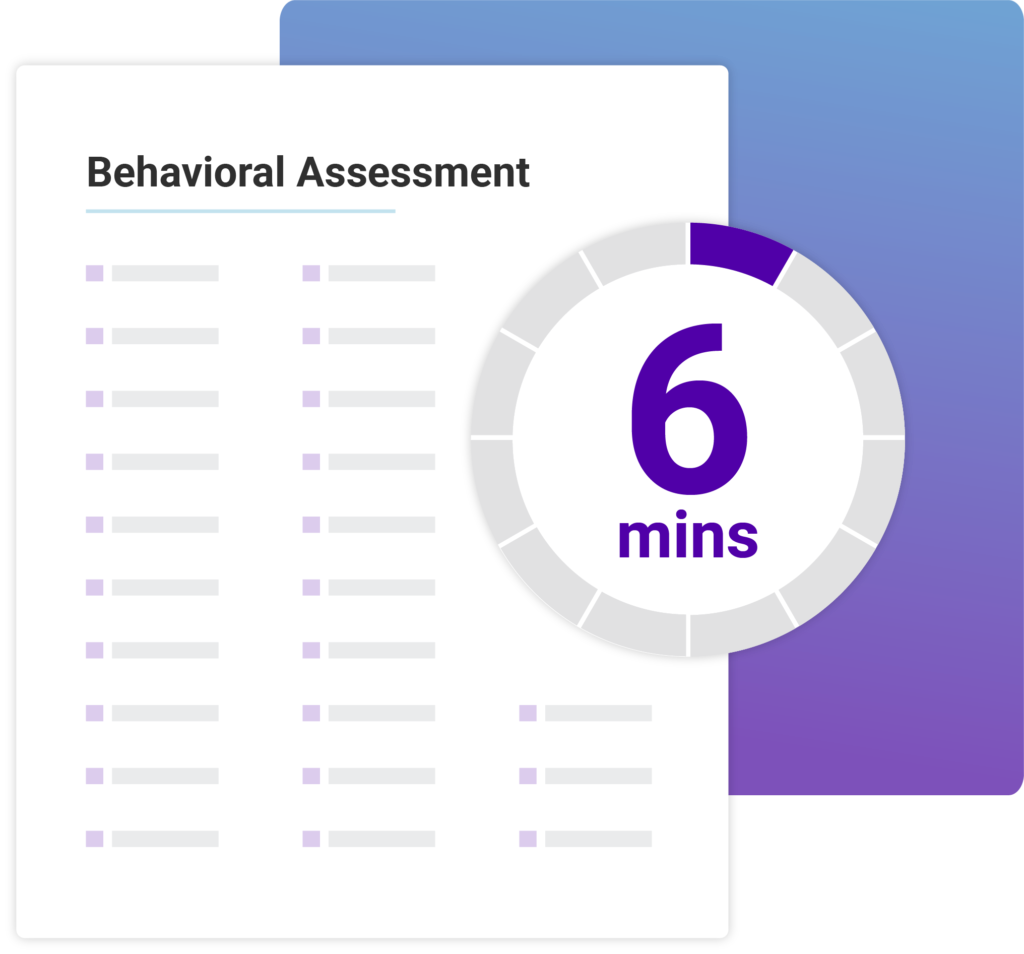
The PI Behavioural Assessment is an untimed, 2 question assessment that measures the 4 main behavioural drives of Dominance, Extraversion, Patience and Formaltity.

As delivered by Predictive Success, Predictive Index combines behavioral science with practical business application to help organizations make smarter people decisions across hiring, leadership, team development, and employee engagement.

This is not about assigning personality labels.

This is about improving execution.

Predictive Index helps leaders understand:

  • How people are naturally wired to behave at work
  • What drives and motivates employees
  • How individuals communicate and collaborate
  • How employees are likely to respond to stress or pressure
  • Whether someone aligns with the behavioural demands of a role
  • How teams can work together more effectively

Most importantly, it provides leaders with structured, objective data that helps reduce bias and improve consistency in decision-making.

Instead of relying entirely on gut instinct, leaders gain a data-driven framework for evaluating talent.

Better Hiring Decisions Start With Better Data

Hiring mistakes are expensive.

A bad hire impacts productivity, morale, engagement, customer relationships, and ultimately profitability. Yet many organizations continue to make hiring decisions based on resumes, interviews, and instinct alone.

Predictive Index changes that process.

By measuring workplace drives and behavioural tendencies, leaders gain deeper insight into how candidates are likely to perform within the specific demands of a role.

This allows organizations to:

  • Hire more confidently
  • Reduce turnover
  • Improve candidate-role fit
  • Build stronger teams
  • Accelerate onboarding
  • Increase employee engagement

The financial impact can be significant.

Many Predictive Success clients see a two-to-three-times return on investment simply by avoiding one poor hiring decision.

When organizations improve hiring consistency, the benefits extend far beyond recruitment.

Stronger hiring leads to stronger leadership pipelines, healthier team dynamics, and better long-term business performance.

Real Organizations. Real Results.

The effectiveness of Predictive Index is not limited to one industry or business type.

Organizations across healthcare, manufacturing, professional services, and government sectors use the platform to improve leadership and team performance.

At Arthritis Society Canada, Predictive Index helped improve hiring practices and leadership communication. The organization achieved employee engagement levels above 90 percent while strengthening retention and improving how leaders connected with their teams.

At Bruce Power, Predictive Index created a common language around communication, leadership, and collaboration within a highly complex and safety-focused environment. The organization earned recognition as one of Canada’s Top Employers for six consecutive years.

Even the United States Navy has used Predictive Index to strengthen leadership effectiveness and team performance in high-pressure environments where communication, trust, and execution are critical.

These examples reinforce an important point.

Predictive Index is not simply a personality assessment.

It is a business performance tool.

Leadership Development That Actually Drives Change

Many leadership programs fail because they focus too heavily on theory.

Leaders attend workshops, complete assessments, and gain awareness, but little changes once they return to work.

Predictive Index bridges the gap between insight and action.

Leaders gain practical strategies they can apply immediately to improve communication, coach employees more effectively, manage conflict, and build stronger teams.

Instead of using generic leadership approaches, managers can adapt their communication and management style based on what actually motivates each employee.

That creates stronger relationships, better engagement, and higher-performing teams.

In today’s workforce, where employee expectations continue to evolve, leaders need more than leadership theory.

They need tools that help them lead real people in real business environments.

The Bottom Line

Most personality tests are interesting.

Few are built to drive measurable business performance.

Traditional assessments may create awareness, but awareness alone does not improve hiring outcomes, strengthen leadership teams, or reduce turnover.

And relying solely on instinct is no longer enough.

The organizations that consistently outperform their competitors are the ones making smarter people decisions backed by data, structure, and behavioral insight.

That is exactly what The Predictive Index, as delivered by Predictive Success, was designed to do.

It helps organizations move beyond guesswork and build stronger teams through better hiring, better leadership, and better alignment between people and business strategy.

Because growth is not driven by personality labels.

It is driven by better decisions about people.

Adrienne Reilly

Adrienne Reilly is a Client Success Marketing Associate at Predictive Success Corporation, where she supports organizations in implementing The Predictive Index and enhancing their people strategy. She contributes to client onboarding, marketing initiatives, workshop facilitation, and event execution, helping deliver impactful client experiences.

Adrienne holds an Honours Bachelor of Science in Kinesiology from Ontario Tech University. With a background in healthcare and over 500 hours of clinical experience, she brings a people-first approach, strong communication skills, and a passion for building high-performing teams.

Share This Article, Choose:

Related Blogs